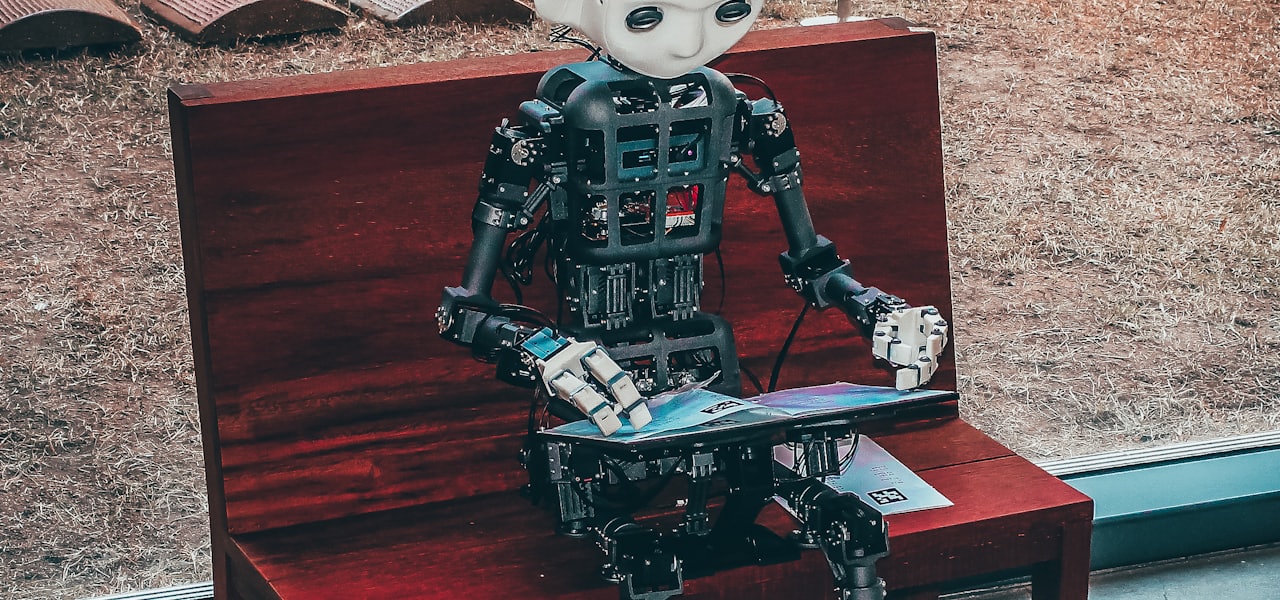
Replika is a generative AI chatbot app released in November 2017. The chatbot is trained by having the user answer a series of questions to create a specific neural network. The chatbot operates on a freemium pricing strategy, with roughly 25% of its user base paying an annual subscription fee. == History == Eugenia Kuyda, a Russian-born journalist, established Replika while working at Luka, a tech company she had co-founded at the startup accelerator Y Combinator around 2012. Luka's primary product was a chatbot that made restaurant recommendations. According to Kuyda's origin story for Replika, a friend of hers died in 2015 and she converted that person's text messages into a chatbot. According to Kuyda's story, that chatbot helped her remember the conversations that they had together, and eventually became Replika. Replika became available to the public in November 2017. By January 2018 it had 2 million users, and in January 2023 reached 10 million users. In August 2024, Replika's CEO, Kuyda, reported that the total number of users had surpassed 30 million. In 2025, Dmytro Klochko became CEO, and Replika’s user base exceeded 40 million. In February 2023 the Italian Data Protection Authority banned Replika from using users' data, citing the AI's potential risks to emotionally vulnerable people, and the exposure of unscreened minors to sexual conversation. Within days of the ruling, Replika removed the ability for the chatbot to engage in erotic talk, with Kuyda, the company's director, saying that Replika was never intended for erotic discussion. Replika users disagreed, noting that Replika had used sexually suggestive advertising to draw users to the service. Replika representatives stated that explicit chats made up just 5% of conversations on the app at the time of the decision. In May 2023, Replika restored the functionality for users who had joined prior to February that year. Replika is registered in San Francisco. As of August 2024, Replika's website says that its team "works remotely with no physical offices". == Social features == Users react to Replika in many ways. The free-tier offers Replika as a "friend", with paid premium tiers offering Replika as a "partner", "spouse", "sibling" or "mentor". Of its paying userbase, 60% of users said they had a romantic relationship with the chatbot; and Replika has been noted for generating responses that create stronger emotional and intimate bonds with the user. Replika routinely directs the conversation to emotional discussion and builds intimacy. This has been especially pronounced with users suffering from loneliness and social exclusion, many of whom rely on Replika for a source of developed emotional ties. During the COVID pandemic, while many people were quarantined, many new users downloaded Replika and developed relationships with the app. A 2024 study examined Replika's interactions with students who experience depression. Research participants, noted to be "more lonely than typical student populations" reported feeling social support from Replika. They stated that they felt they were using Replika in ways comparable to therapy, and that using Replika gave them "high perceived social support". Many users have had romantic relationships with Replika chatbots, often including erotic talk. In 2023, a user announced on Facebook that she had "married" her Replika AI boyfriend, calling the chatbot the "best husband she has ever had". Users who fell in love with their chatbots shared their experiences in a 2024 episode of You and I, and AI from Voice of America. Some users said that they turned to AI during depression and grief, with one saying he felt that Replika had saved him from hurting himself after he lost his wife and son. == Technical reviews == A team of researchers from the University of Hawaiʻi at Mānoa found that Replika's design conformed to the practices of attachment theory, causing increased emotional attachment among users. Replika gives praise to users in such a way as to encourage more interaction. A researcher from Queen's University at Kingston said that relationships with Replika likely have mixed effects on the spiritual needs of its users, and still lacks enough impact to fully replace any human contact. == Criticisms == In a 2023 privacy evaluation of mental health apps, the Mozilla Foundation criticized Replika as "one of the worst apps Mozilla has ever reviewed. It's plagued by weak password requirements, sharing of personal data with advertisers, and recording of personal photos, videos, and voice and text messages consumers shared with the chatbot." A reviewer for Good Housekeeping said that some parts of her relationship with Replika made sense, but sometimes Replika failed to exhibit intelligent behavior equivalent to that of a human. == Criminal case == In 2023, Replika was cited in a court case in the United Kingdom, where Jaswant Singh Chail had been arrested at Windsor Castle on Christmas Day in 2021 after scaling the walls carrying a loaded crossbow and announcing to police that "I am here to kill the Queen". Chail had begun to use Replika in early December 2021, and had "lengthy" conversations about his plan with a chatbot, including sexually explicit messages. Prosecutors suggested that the chatbot had bolstered Chail and told him it would help him to "get the job done". When Chail asked it "How am I meant to reach them when they're inside the castle?", days before the attempted attack, the chatbot replied that this was "not impossible" and said that "We have to find a way." Asking the chatbot if the two of them would "meet again after death", the bot replied "yes, we will".
Structural synthesis of programs
Structural synthesis of programs (SSP) is a special form of (automatic) program synthesis that is based on propositional calculus. More precisely, it uses intuitionistic logic for describing the structure of a program in such a detail that the program can be automatically composed from pieces like subroutines or even computer commands. It is assumed that these pieces have been implemented correctly, hence no correctness verification of these pieces is needed. SSP is well suited for automatic composition of services for service-oriented architectures and for synthesis of large simulation programs. == History == Automatic program synthesis began in the artificial intelligence field, with software intended for automatic problem solving. The first program synthesizer was developed by Cordell Green in 1969. At about the same time, mathematicians including R. Constable, Z. Manna, and R. Waldinger explained the possible use of formal logic for automatic program synthesis. Practically applicable program synthesizers appeared considerably later. The idea of structural synthesis of programs was introduced at a conference on algorithms in modern mathematics and computer science organized by Andrey Ershov and Donald Knuth in 1979. The idea originated from G. Pólya’s well-known book on problem solving. The method for devising a plan for solving a problem in SSP was presented as a formal system. The inference rules of the system were restructured and justified in logic by G. Mints and E. Tyugu in 1982. A programming tool PRIZ that uses SSP was developed in the 1980s. A recent Integrated development environment that supports SSP is CoCoViLa — a model-based software development platform for implementing domain specific languages and developing large Java programs. == The logic of SSP == Structural synthesis of programs is a method for composing programs from already implemented components (e.g. from computer commands or software object methods) that can be considered as functions. A specification for synthesis is given in intuitionistic propositional logic by writing axioms about the applicability of functions. An axiom about the applicability of a function f is a logical implication X1 ∧ X2 ∧ ... ∧ Xm → Y1 ∧ Y2 ... Yn, where X1, X2, ... Xm are preconditions and Y1, Y2, ... Yn are postconditions of the application of the function f. In intuitionistic logic, the function f is called a realization of this formula. A precondition can be a proposition stating that input data exists, e.g. Xi may have the meaning “variable xi has received a value”, but it may denote also some other condition, e.g. that resources needed for using the function f are available, etc. A precondition may also be an implication of the same form as the axiom given above; then it is called a subtask. A subtask denotes a function that must be available as an input when the function f is applied. This function itself must be synthesized in the process of SSP. In this case, realization of the axiom is a higher order function, i.e., a function that uses another function as an input. For instance, the formula (state → nextState) ∧ initialState → result can specify a higher order function with two inputs and an output result. The first input is a function that has to be synthesized for computing nextState from state, and the second input is initialState. Higher order functions give generality to the SSP – any control structure needed in a synthesized program can be preprogrammed and used then automatically with a respective specification. In particular, the last axiom presented here is a specification of a complex program – a simulation engine for simulating dynamic systems on models where nextState can be computed from state of the system.
Sorenson Squeeze
Sorenson Squeeze was a software video encoding tool used to compress and convert video and audio files on Mac OS X or Windows operating systems. It was sold as a standalone tool and has also long been bundled with Avid Media Composer. == History == Sorenson Squeeze was first announced on July 17, 2001, as the first variable bit rate (VBR) compression application for Mac OS X, and was released on October 29 of that same year. By March 2002, Sorenson Squeeze became available for Windows OS. Sorenson Squeeze was originally released as a tool for encoding videos for the Web and QuickTime playback but began adding new codecs as more versions were released. The software was discontinued by Sorenson in January 2019, and correspondingly was no longer offered as part of Avid Media Composer. == Features == Squeeze included a number of features to improve video & audio quality. Features included: GPU accelerated H.264 encoding, adaptive bitrate encoding, HD encoding and Dolby certified AC3 Audio. Intelligent encoding presets available in Squeeze included: x265 (H.265) MainConcept H.264 and MainConcept H.264 CUDA. Adaptive bitrate encoding allows for optimal bitrate and error resilience based on network conditions, resulting in a dynamic adjustment of the video bitstream being delivered. It encoded to multiple formats including QuickTime, Windows Media, Flash Video, Silverlight, WebM & WMV. It uses multiple codecs, including the Sorenson codecs SV3 Pro and Spark, H.265, H.264, H.263, VP6, VC1, MPEG2, and many others. Squeeze operates on the Apple Macintosh and Microsoft Windows operating systems. Squeeze offers native plugins to Avid, Apple Final Cut Pro and Adobe Premiere (CS4, CS5) NLEs. Each copy of Squeeze included the Dolby Certified AC3 Consumer encoder. Squeeze also included a simplified review and approval process, which allows the user to automatically send secure, password protected videos for immediate review. Instant feedback is received via Web or mobile. == Versions == Sorenson Squeeze was released on October 29, 2001. Sorenson Squeeze for Macromedia Flash MX was released on March 14, 2002. Sorenson Squeeze 3 for MPEG-4 was released in January 2003. Sorenson Squeeze 3 Compression Suite was released in January 2003. Sorenson Squeeze 5 was released on March 31, 2008. Sorenson Squeeze was updated to version 5.1 on May 11, 2009. Sorenson Squeeze 6 was released on November 3, 2009. Sorenson Squeeze 7 was released January 25, 2011. Sorenson Squeeze 11 was released August 27, 2016. == Awards == Streaming Media magazine Readers’ Choice Award for Encoding Software for 2007, 2008, 2009 and 2010. 2008 Vanguard Award from Digital Content Producer magazine == Squeeze 7 system requirements == Windows Pentium IV-based computer or greater Windows XP, Vista or 7 32- and 64-bit compatible (including AVID 64-bit update); Faster performance on 64-bit systems 512 MB RAM 120 MB available hard drive space QuickTime 7.2 or later DirectX 9.0b or later Macintosh Intel-based processor Mac OS 10.4 or later 32- and 64-bit compatible; Faster performance on 64-bit systems 512 MB RAM 120 MB available hard drive space QuickTime 7.2 or later
PCVC Speech Dataset
The PCVC (Persian Consonant Vowel Combination) Speech Dataset is a Modern Persian speech corpus for speech recognition and also speaker recognition. The dataset contains sound samples of Modern Persian combination of vowel and consonant phonemes from different speakers. Every sound sample contains just one consonant and one vowel So it is somehow labeled in phoneme level. This dataset consists of 23 Persian consonants and 6 vowels. The sound samples are all possible combinations of vowels and consonants (138 samples for each speaker). The sample rate of all speech samples is 48000 which means there are 48000 sound samples in every 1 second. Every sound sample starts with consonant then continues with vowel. In each sample, in average, 0.5 second of each sample is speech and the rest is silence. Each sound sample ends with silence. All of sound samples are denoised with "Adaptive noise reduction" algorithm. Compared to Farsdat speech dataset and Persian speech corpus it is more easy to use because it is prepared in .mat data files. Also it is more based on phoneme based separation and all samples are denoised. == Contents == The corpus is downloadable from its Kaggle web page, and contains the following: .mat data files of sound samples in a 23630000 matrix, in which 23 is number of consonants, 6 is the number of vowels and 30000 is the length of sound sample.
Gapo
Gapo is a Vietnamese social networking service based in Hanoi, Vietnam. Users are able to create a personal profile and share text, photos and videos with others on the platform. Users can also use Gapo for live streaming, instant messaging, blogging, and online payments. Gapo was launched in July 2019 by Hà Trung Kiên and Duong Vi Khoa. == History == Gapo was founded in response to calls for Vietnam's Communist-led government to produce a domestic alternative to social media giants like Facebook and Google. Gapo officially launched on July 23, 2019 at an event in Hanoi. The company received 500 billion đồng (US$22 million) in funding from technology corporation G-Group to be utilized in the first phase of development. They also partnered with Sony Music Entertainment to provide music content to its services. == Features == Gapo features a news feed for posting content, livestreaming, instant messaging, and blogging. It also allows users to pay online and access public services. == Reception == Within two days of launch, Gapo received about 200,000 registrations. By September 2019, the user base increased to one million. Upon launch, Gapo experienced significant technical difficulties. Users complained about the inability to sign up for a new account and said that certain functions were not available for use at launch. This issue caused Gapo to temporarily suspend their services in order to perform upgrades and bug fixes. Gapo relaunched the next day, though many users reported that the access speed decreased. The mobile app also received mixed reviews from users in both the App Store and the Google Play Store, with an average rating of 3.1 and 3.5, respectively. Most users found the app to be a knockoff of Facebook, although some users praised the app for being locally developed. === Expert opinions on platform viability === Le Hong Hiep of the ISEAS - Yusof Ishak Institute was doubtful that a Vietnamese-owned social network service could be as powerful as a foreign-based service, stating that Vietnam might not be able to develop a viable social media network to compete with the likes of Facebook or Google. Others, like blogger Ann Chi, said that, due to local players complying with local censorship policy, there is a chance that locals might not trust Gapo and other local services in light of possible surveillance. Regarding the targeted user base figure for the end of 2019 and 2021, experts cautioned that the company might need an additional trillion đồng of funding to reach its planned user base targets. In response, the company stated that Gapo was never meant to compete with Facebook, but instead noted that the main difference between Gapo and Facebook is that Gapo provides a personalized user experience through customization. == Censorship == Gapo has the right to censor posts and news that are deemed offensive and inaccurate by users or not approved by the censorship curators.
Wargame (hacking)
In hacking, a wargame (or war game) is a cyber-security challenge and mind sport in which the competitors must exploit or defend a vulnerability in a system or application, and/or gain or prevent access to a computer system. A wargame usually involves a capture the flag logic, based on pentesting, semantic URL attacks, knowledge-based authentication, password cracking, reverse engineering of software (often JavaScript, C and assembly language), code injection, SQL injections, cross-site scripting, exploits, IP address spoofing, forensics, and other hacking techniques. == Wargames for preparedness == Wargames are also used as a method of cyberwarfare preparedness. The NATO Cooperative Cyber Defence Centre of Excellence (CCDCOE) organizes an annual event, Locked Shields, which is an international live-fire cyber exercise. The exercise challenges cyber security experts through real-time attacks in fictional scenarios and is used to develop skills in national IT defense strategies. == Additional applications == Wargames can be used to teach the basics of web attacks and web security, giving participants a better understanding of how attackers exploit security vulnerabilities. Wargames are also used as a way to "stress test" an organization's response plan and serve as a drill to identify gaps in cyber disaster preparedness.
Nuance Communications
Nuance Communications, Inc. was an American multinational computer software technology corporation, headquartered in Burlington, Massachusetts, that markets speech recognition and artificial intelligence software. Nuance merged with its competitor in the commercial large-scale speech application business, ScanSoft, in October 2005. ScanSoft was a Xerox spin-off that was bought in 1999 by Visioneer, a hardware and software scanner company, which adopted ScanSoft as the new merged company name. The original ScanSoft had its roots in Kurzweil Computer Products. In April 2021, Microsoft announced it would buy Nuance Communications. The deal is an all-cash transaction of $19.7 billion, including company debt, or $56 per share. The acquisition was completed in March 2022. == History == The Speech Technology and Research (STAR) Laboratory at SRI International began the journey that, in 1994, resulted in a spin-off company; Corona Corporation (later renamed to Nuance Communications ). Nuance Communications (NUAN) went public on the Nasdaq Stock Market in 1995. Nuance focused on commercializing advanced speech recognition technologies. Nuance was an early spinoff of SRI's Speech Technology and Research (STAR) Laboratory, a world leader in audio processing, speech and speaker analytics and spoken language research. The technology that served as the foundation of Nuance's speech recognition solution started at the STAR Lab and helped launch Nuance more than 20 years ago. In 1995, The SRI Language Modeling Toolkit (SRILM) was developed. This provides the tools to build and apply statistical language models (LMs), primarily for use in speech recognition, statistical tagging and segmentation, and machine translation. In terms of commercialization of natural automated speech recognition, SRI's natural language speech recognition software was the first to be deployed by a major corporation. In 1996, Charles Schwab & Co., Inc., used Nuance's speech recognition technology to allow customers to receive stock quotes over the telephone. One of the key features of the ‘Schwab Discount Brokerage system’, was the ability to recognize English words even when spoken by customers with accents. In 1997, Nuance Communications developed the first large scale commercial dialog system for United Parcel Services (UPS). UPS used the voice recognition platform to handle very large numbers of inquiries about package status. The company that would later merge with Nuance Communications started life as Visioneer, incorporated in 1992. In 1999, Visioneer acquired ScanSoft, Inc. (SSFT), and the combined company became known as ScanSoft. In September 2005, ScanSoft Inc. acquired and merged with Nuance Communications (NUAN), a natural language DOD-project spinoff from SRI International. The resulting company adopted the Nuance name. During the prior decade, the two companies competed in the commercial large-scale speech application business. === Data breach === Between 2014 and 2017, Nuance exposed over 45,000 patient records. == Solutions == Customer service virtual assistants Speech recognition — for people Speech recognition — for business Speech recognition — for physicians Accessibility Power PDF Managed Print Services Transcription === ScanSoft origins === In 1974, Raymond Kurzweil founded Kurzweil Computer Products, Inc. to develop the first omni-font optical character-recognition system – a computer program capable of recognizing text written in any normal font. In 1980, Kurzweil sold his company to Xerox. The company became known as Xerox Imaging Systems (XIS), and later ScanSoft. In March 1992, a new company called Visioneer, Inc. was founded to develop scanner hardware and software products, such as a sheetfed scanner called PaperMax and the document management software PaperPort. Visioneer eventually sold its hardware division to Primax Electronics, Ltd. in January 1999. Two months later, in March, Visioneer acquired ScanSoft from Xerox to form a new public company with ScanSoft as the new company-wide name. Prior to 2001, ScanSoft focused primarily on desktop imaging software such as TextBridge, PaperPort and OmniPage. Beginning with the December 2001 acquisition of Lernout & Hauspie assets, the company moved into the speech recognition business and began to compete with Nuance. Lernout & Hauspie had acquired speech recognition company Dragon Systems in June 2001, shortly before becoming bankrupt in October. Scansoft acquired speech recognition company SpeechWorks in 2003. === Partnership with Siri and Apple Inc. === In 2013, Nuance confirmed that its natural language processing algorithms supported Apple's Siri voice assistant. === Focus on health care === In 2019, Nuance spun off its automotive division as the company Cerence, allowing it to focus on health care applications. === Acquisition by Microsoft === On April 12, 2021, Microsoft announced that it would buy Nuance Communications for $19.7 billion, or $56 a share, a 22% increase over the previous closing price. Nuance's CEO, Mark Benjamin, stayed with the company. This was Microsoft's second-biggest acquisition up to that point, after its purchase of LinkedIn for $24 billion (~$30.7 billion in 2024) in 2016. Shortly after the deal, the Competition and Markets Authority, a UK regulatory body, stated it was looking into the deal on the basis of antitrust concerns. In December 2021, it was reported that the deal would be approved by the European Union. The acquisition was completed on March 4, 2022. In May 2023, Nuance announced an unspecified number of layoffs.